

Lemon Curd & Berry Pavlova
If you could eat a baked meringue that’s crisp on the outside, with a soft marshmallowy inside and topped with fresh whipped cream and fruit, would you? If you answered yes, you’re probably going to fall in love with this lemon curd and berry pavlova. It’s simply perfect in every way, and so perfect for summer!
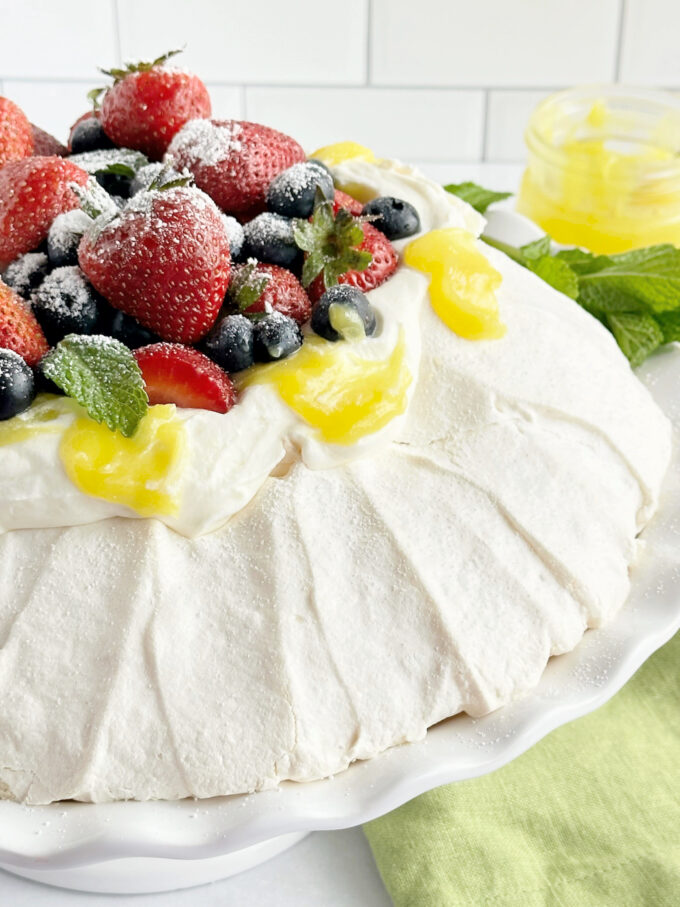
This pavlova recipe is the perfect summer dessert, and it will certainly impress your guests when you serve it. Topped with lemon curd, whipped cream and tons of fruit, how could anyone resist this show stopping dessert?
It’s believed by many that Pavlova originated in Australia or New Zealand, and was named after the Russian ballerina, Anna Pavlova. Regardless of where it originated, I’m so happy that’s it’s well known here in the states. Once you try it you’ll see what I mean.
What is Pavlova?
Pavlova is a meringue based dessert, made from egg whites. When baked in a low oven, the meringue develops a crisp outer shell, and soft melt-in-your-mouth marshmallowy center. It’s usually topped with fresh whipped cream, and a variety of fruits. Some have lemon curd tucked inside, like this recipe.
Pavlova (meringue) Ingredients
- Egg Whites – Egg whites are the main ingredient in pavlova. The egg whites get beaten into stiff peaks and until about tripled in volume. They form the meringue base of the pavlova.
- Acid – In this recipe we used cream of tartar. You can also use lemon juice or vinegar. The acid improves the structure of meringue. It helps to aerate the meringue and keep it stable. Without some type of acid, the meringue will most likely collapse. The cream of tartar or other acid coaxes bubbles into sticking to each other, making them much less likely to collapse.
- Salt – We only use a pinch in this recipe to pull the flavors together.
- Pure vanilla extract – We used pure vanilla extract, just enough for some vanilla marshmallowy flavor.
- Super fine granulated sugar – Sugar is for added sweetness. However, it also plays a role in the texture of the pavlova. If you don’t have super fine sugar don’t worry. Place regular granulated sugar in a blender and pulse it a few times. The finer sugar will dissolve easier in the meringue. It’s important that all the sugar gets dissolved in the meringue, or it can cause weeping.
- Cornstarch – Helps to soak up any liquid left in the meringue, keeping the meringue from weeping. It does its work during the baking process. It also helps to create a crispy outer layer and a chewy marshmallowy inside that’s easier to cut and doesn’t shatter into pieces when cutting.
Topping Ingredients
- Fresh berries – We used blueberries and strawberries in this recipe. However, feel free to use any summer berries in this pavlova or other fruit of your liking.
- Fresh whipped cream – I say this is a must!! Fresh whipped cream piled on top of a marshmallowy crisp top covering a marshmallowy center. You just have to try it!
- Lemon curd – You can use store bought or use my easy homemade lemon curd recipe. The tartness of the lemon curd totally complements the sweet meringue.

How to make Pavlova
Before you start: Preheat oven to 350 degrees. Using a 9-inch round plate or bowl, use a pencil to trace a round circle on one side of a large piece of parchment paper. Place the paper, pencil side down, on a baking sheet and set aside.
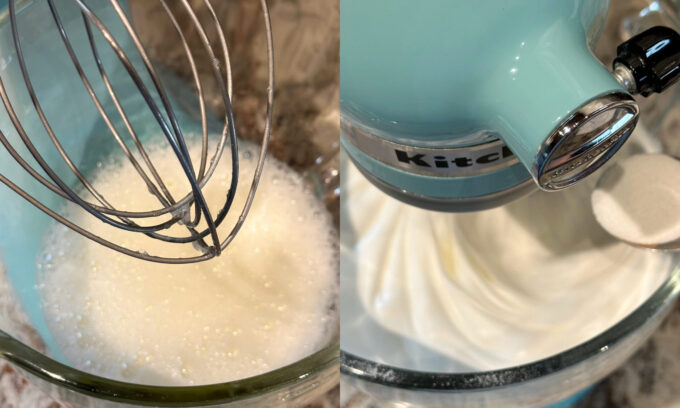
In the clean and dry bowl of a stand mixer, fitted with the whisk attachment, whisk together the egg whites, cream of tartar and salt. Whisk on low speed for about one minute, or until the mixture becomes foamy/frothy. It’s important to use a low speed in the beginning.
Once the egg whites become frothy, slowly add the sugar, one spoonful at a time. This is necessary so that each addition of sugar has time to dissolve before adding more. The sooner you add sugar to the egg whites, the denser and firmer the meringue will be.

Whisking too aggressively in the beginning will incorporate too much air too quickly, before the protein really has a chance to set up. This will result in a meringue that’s weak and unable to hold itself up, like the picture above.

Once all of the sugar is incorporated, stop the mixer and scrape down the sides of the bowl. Start the mixer again on medium low speed and add in the vanilla.
Whisk the mixture on medium high until the egg whites are very stiff. They should have tall glossy peaks that stand on their own without falling over. Remove the whisk attachment, and remove the bowl from the mixer.
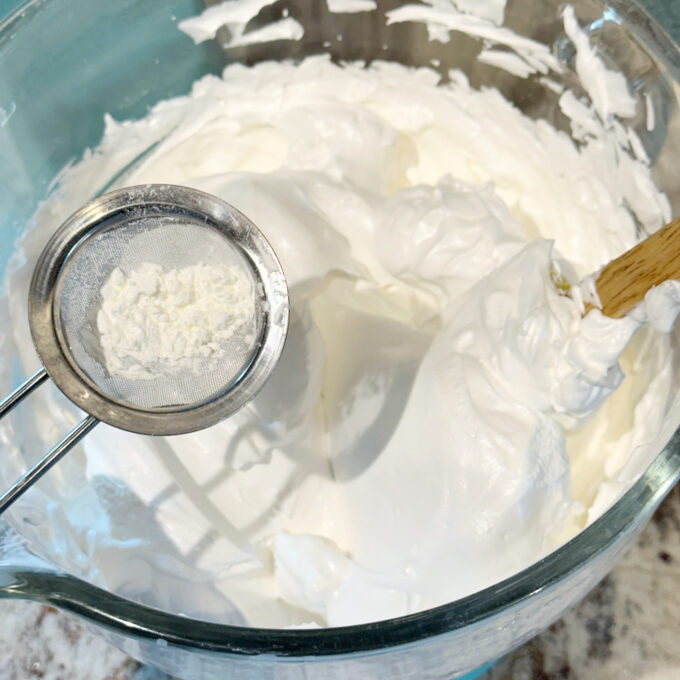
Sprinkle or sift the cornstarch over the egg whites. Use a spatula to gently fold the cornstarch into the egg whites.
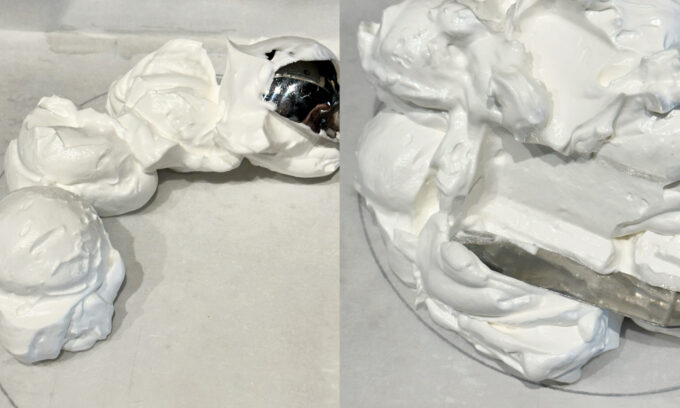
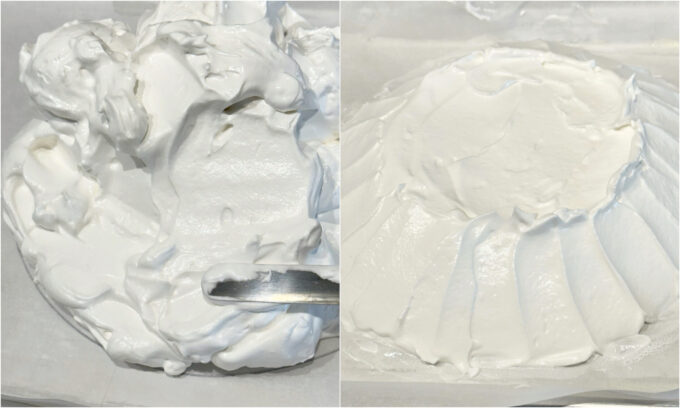
Spoon large mounds of the meringue onto the drawn circle on the parchment paper. I like to use a large 1/2 cup cookie scoop, but you can use a large spoon or spatula.
Using an offset spatula, spread the meringue to the edges of the circle. Then use the spatula to make an indentation several inches in diameter on the top. Use the back of a spatula to make vertical swoops up the sides of the meringue, or you can choose to leave it plain.
Place the meringue into the preheated oven. Immediately reduce the oven temperature to 200 degrees. Bake the meringue for 1 1/2 hours, or until the meringue is dry and crispy on the outside. If you lightly thump it with your finger it should feel hard. The meringue will have a slight color to it.

Pro tips For This Recipe
- Make sure your mixing bowl is clean, dry, and free of any grease or butter residue. One small amount of grease will interfere with the egg white being able to whip to their fullest.
- Make sure your egg whites are at room temperature. Eggs are easier to separate when they are cold. However, they whip up quicker and more voluminous, when they are at room temperature.
- If you can’t find caster or superfine sugar, add your sugar to a blender, and pulse it a few times. The finer sugar will dissolve easier when you’re beating the meringue. You don’t want any undissolved sugar when making meringue.
- Make sure you follow the recipe when adding the sugar, and don’t wait too late to add it. The sooner you add sugar to egg whites, the denser and firmer the meringue will be. If you wait and add it towards the end, the meringue will be light and fluid like. We don’t want that!
- Pavlovas crumble and break easily. When you get ready to cut and serve the pavlova, use a hot knife, preferably a serrated knife, and cut straight down, making sure to cut all the way through the meringue. Dip the knife in a glass of hot water, wiping it dry between each cut.
- DO NOT open the oven door while the meringue is baking.
- Don’t overload your pavlova with too much heavy fruit. It will cause cracks in the meringue. Pavlovas are already known for cracking, but too much weight on top will cause excessive cracking.
Frequently Asked Questions
Why do I need to preheat the oven to 350 before turning it down to 200 degrees?
The hot temperature sets the meringue, keeping it from spreading or slumping. Once you reduce the oven to 200 degrees, the meringue will have just enough time from the hotter temperature to set up around the sides before the oven cools down to 200 degrees.
Can I freeze the pavlova?
Yes. You can freeze pavlova for up to one month without the toppings. To thaw, unwrap the pavlova and thaw at room temperature.
How long will the pavlova stay fresh?
Pavlova will stay fresh if refrigerated for up to two days. After that the meringue will start weeping and breaking down, regardless of what type of meringue you use.
Can I use a hand held mixer to make the meringue?
Yes, but it will take longer to whip up the egg whites.
When should I assemble the pavlova?
I recommend assembling the pavlova either right before or up to one hour before serving it, especially if you’re topping it with juicy fruit. That way the pavlova will stay crispy on the outside.
Why did my pavlova weep?
There are a few things that can make the meringue weep.
- If the sugar hasn’t been totally dissolved into the egg whites. That’s why it’s important to add the sugar slowly, a little at a time, giving it time to dissolve.
- Over or under beating the egg whites will cause weeping. The egg whites should be stiff and shiny, but not dry and dull in appearance.
- Under baking the meringue. The meringue should be baked until it is dry to the touch.
- If your kitchen is humid, it can cause the meringue to weep.
You might also like my recipe for Mini Lemon Curd Pavlovas.
If you make this recipe, please give it a rating and leave a comment below on how you liked it. I love hearing from you. 🙂
Wanna see different recipes each day? Feel free to follow along on Facebook, Instagram, or on Pinterest where I have all of my delicious recipes and more.
Print
Lemon Curd and Berry Pavlova
- Prep Time: 20 minutes
- Cook Time: 90 minutes
- Total Time: 1 hour 50 minutes
- Yield: 6 to 8 servings 1x
- Category: Dessert
- Method: Bake
- Cuisine: Australian
Description
This pavlova is the perfect light summer dessert. It’s crispy on the outside, and soft and marshmallowy on the inside. Then, when you top it with the homemade whipped cream and fruit, it’s to die for!
Ingredients
MERINGUE
- 6 large egg whites, room temperature
- 1/2 teaspoon cream of tartar
- Pinch of salt
- 1 teaspoon pure vanilla extract
- 1 1/4 cups superfine sugar (see tips below)
- 1 1/2 teaspoons cornstarch
LEMON CURD
- 1/2 cup store bought or make my homemade lemon curd.
WHIPPED CREAM
- 1 1/2 cups heavy whipping cream
- 1 teaspoon pure vanilla extract
- 1/3 cup powdered sugar
TOPPINGS
- fresh fruit
- fresh mint for garnish (optional)
- powdered sugar for sprinkling on top
 Get Recipe Ingredients
Instructions
- Preheat oven to 350 degrees. Using a 9-inch round plate or bowl, use a pencil to trace a round circle on one side of a large piece of parchment paper. Place the paper, pencil side down, on a baking sheet and set aside.
- In the clean and dry bowl of a stand mixer, fitted with the whisk attachment, whisk together the egg whites, cream of tartar and salt. Whisk on low speed for about one minute, or until the mixture becomes foamy/frothy.
- Once the egg whites become frothy, slowly add the sugar, one spoonful at a time. This is necessary so that each addition of sugar has time to dissolve before adding more. Once all of the sugar is incorporated, stop the mixer and scrape down the sides of the bowl. Start the mixer again on medium low speed and add in the vanilla.
- Whisk the mixture on medium high until the egg whites are very stiff. They should have tall glossy peaks that stand on their own without falling over. Remove the whisk attachment, and remove the bowl from the mixer. Sprinkle or sift the cornstarch over the egg whites. Use a spatula to gently fold the cornstarch into the egg whites.
- Spoon large mounds of the meringue onto the drawn circle on the parchment paper. I like to use a large 1/2 cup cookie scoop, but you can use a large spoon or spatula. Using an offset spatula, spread the meringue to the edges of the circle. Then use the spatula to make an indentation several inches in diameter on the top. Use the back of a spatula to make vertical swoops up the sides of the meringue, or you can choose to leave it plain.
- Place the meringue into the preheated oven. Immediately reduce the oven temperature to 200 degrees. Bake the meringue for 1 1/2 hours, or until the meringue is dry and crispy on the outside. If you lightly thump it with your finger it should feel hard. The meringue will have a slight color to it.
- If serving the same day: Turn the oven off and allow the meringue to cool in the oven for one hour. Then crack the door open with a wooden spoon and cool for an additional hour. If serving the following day: Turn oven off, leave the door closed, and leave the meringue in the oven until the following day. The longer the meringue stays in the oven, the less chance it has of cracking. I prefer to make it in the evening and leave it in the oven overnight. That way the of the work is done the next day.
WHIPPED CREAM
- Add the cold whipping cream, vanilla and powdered sugar to the bowl of a stand mixer fitted with the whisk attachment. Whisk on low speed until everything is combined and the mixture begins to slightly thicken. (Otherwise, it will splatter all over your counter.) Increase to high, and whisk until medium peaks form.
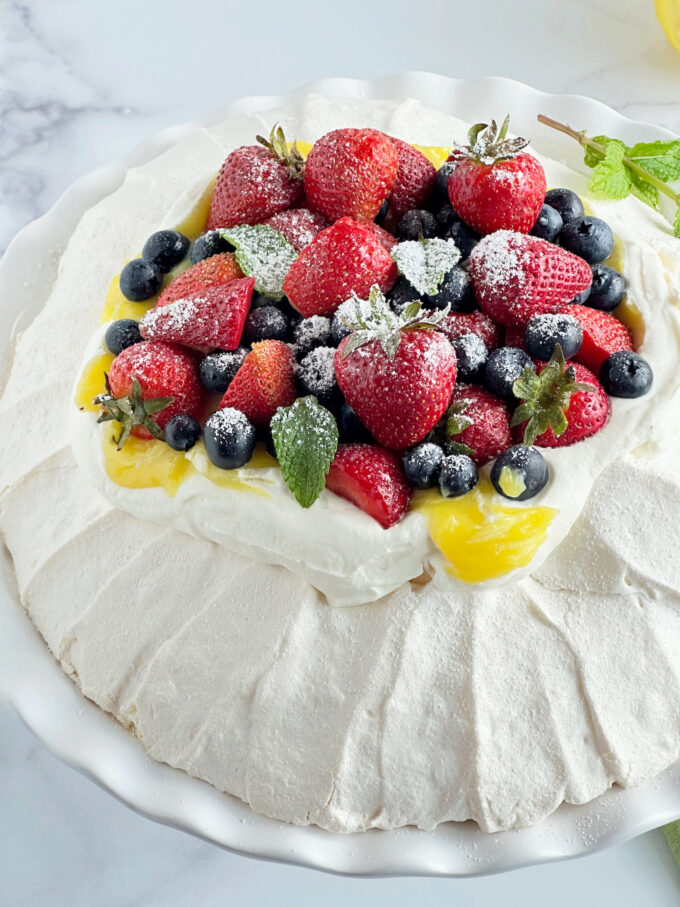
- Carefully peel the cooled meringue from the parchment paper and transfer it to a dessert plate or stand. Top the meringue first with the the lemon curd, followed by the whipped cream, then fruit. Finally, dust the top with powdered sugar.
Notes
- Make sure to read the pro tips above this recipe card, so you can make a perfect pavlova.